
SPEED
EASY NAVIGATION
QUICK RESPONSES
DIRECT SHIPMENTS
GLOBAL SUPPORT
EXCELLENCE
QUALITY SUPPLIERS
PROMPT SERVICE
SATISFACTION IS
#1 PRIORITY
ECONOMICS
LOWEST PRICES
FREE FREIGHT
QUICK DELIVERIES
KNOWLEDGE
FACTORY TRAINED
OTJ EXPERIENCE
ENGINEERING SUPPORT
Eaton Model 91 T Strainers
Compact Custom Fabricated Tee Strainers
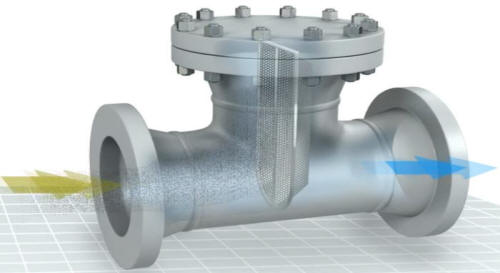
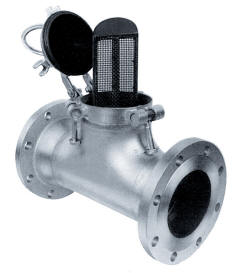
Tee (T) strainers are a compact style of custom fabricated simplex strainer used when a cast Y strainer cannot meet the requirements — for example when corrosion allowance, an ASME code stamp, or an oversized body for higher open area ratio is needed. They can also be installed vertically with downward flow, just like a Y strainer.
Not sure whether a Y or T strainer is better for your application? See our article How to Choose Between a Wye (Y) and T Strainer.
Custom Fabrication Options
Available options include CRN registration, ASME U code stamp, ASME UM stamp (where applicable), welding procedures (WPS, PQR, WPQ), internal/external coatings to customer specification, non-destructive examination (LP, X-ray, PMI, UT, MT, LD), and corrosion allowance.
Supporting documentation can include NDE reports, seismic calculations, wind-load calculations, ASME code calculations, certified material test reports, and domestic/export documentation.
Performance vs. Basket Strainers
Flow coefficient (Cv) values of T strainers are very similar to those of comparable basket strainers, so you gain a more compact footprint without significantly increasing differential pressure. This is made possible by the special convoluted screen design of the Eaton Model 91, which increases total filtration area.
The main difference is particulate holding volume. T strainers have a smaller screen and vessel volume than a same-size basket strainer, making them better suited for applications with a low percentage of particulates (similar to Y strainers). They are especially well suited as condensate and boiler-feed pump suction strainers because of their low clean differential pressure and the typically low volume of debris.
Cover Designs
Two basket chamber cover styles are available:
- Bolted cover — retained by 4 or more studs and nuts
- Quick-opening cover — hinged design with swing bolts for faster access
Quick-opening covers for 300# class units are available upon request (not listed online).
It is important to verify clean differential pressure — some smaller sizes have lower capacity than the corresponding Model 90 basket strainer. Use the calculator to estimate clean ΔP: select connection size, enter flow rate (GPM), adjust specific gravity and viscosity if needed, then update. Target a clean differential of ≤ 2 PSI.
Call 908.362.9981
or Submit the Strainer Inquiry Form