
SPEED
EASY NAVIGATION
QUICK RESPONSES
DIRECT SHIPMENTS
GLOBAL SUPPORT
EXCELLENCE
QUALITY SUPPLIERS
PROMPT SERVICE
SATISFACTION IS
#1 PRIORITY
ECONOMICS
LOWEST PRICES
FREE FREIGHT
QUICK DELIVERIES
KNOWLEDGE
FACTORY TRAINED
OTJ EXPERIENCE
ENGINEERING SUPPORT
Titan BS87 Simplex Strainers
150# Cast Steel and 316SS Basket Strainers
 Model BS-87 Catalog pages
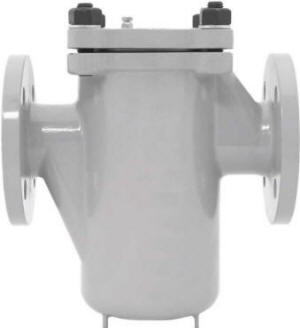
Titan BS87 simplex basket strainers are available in 1" to 16" sizes with a bolted or swing-bolt quick-opening cover. An o-ring seal between the basket support ring and strainer body reduces the potential for particulate bypass in finer filtration applications.
Titan BS-87 Features
- Bolted or quick-opening clamp-style cover
- 304 stainless steel basket
- O-ring basket seat
- Threaded drain
Titan BS-87 Options
- Basket perforations from 1/32" to 1/2"
- Basket mesh from 20 to 400
- 316 stainless steel or Monel baskets
- Vent valves
- 1/4" FNPT taps
- Magnetic basket inserts
- Pressure differential gauge and switch
Dual Annulus Strainer Housing Design
Titan and Eaton use a dual-annulus strainer body design to reduce pressure loss compared with over-the-top and side-entry designs. A slanted or angular basket promotes laminar flow and minimal pressure drop, but the basket geometry reduces the total surface area available for filtration. This can increase cleaning frequency or require a larger strainer body to match the gross surface area of an over-the-top style basket.

An over-the-top style basket maximizes gross filtration area, yet it requires a slightly larger body than an angular-basket design. Keckley SGFV-style strainers use an angular basket; although they are often less expensive for a given size, the reduced surface area typically means more frequent cleaning. Both over-the-top and angular designs have only one annulus associated with the discharge nozzle.
Titan and Eaton’s dual-annulus design retains the over-the-top basket while improving laminar flow by effectively lowering the inlet nozzle (creating a top annulus). This reduces the bottom annulus associated with the outlet nozzle so the fluid does not need to travel as far vertically to exit the strainer, lowering flow resistance.

Few buyers examine strainer body design in this detail, and marketing claims can be misleading. The most reliable way to compare flow efficiency is to examine the flow coefficient (Cv) values of each design.
Flow Coefficient (Cv) is a measure of resistance to fluid passing through piping, valves and pipeline components such as strainers and filters.
While pricing and lead time often drive purchasing decisions, Cv should also be evaluated from a performance standpoint. Higher clean differential pressure increases the frequency of basket changes (labor, downtime and personnel exposure) and can reduce flow (pump cavitation, diminished spray patterns). Baskets with higher Cv values start with a lower differential pressure for a given flow rate and can therefore operate longer between cleanings. They can also support higher flow rates at a given pressure.
Comparison of Cv Values for Eaton, Keckley and Titan Cast Basket Strainers
Cv values for the 1" to 6" sizes are close enough that the designs perform essentially the same; ergonomics, cost and lead time become the deciding factors. In the 10"-16" range Keckley offers a lower initial pressure drop. All three brands can be supplied with a tool-less quick-opening closure (clamp, swing bolt or knob).
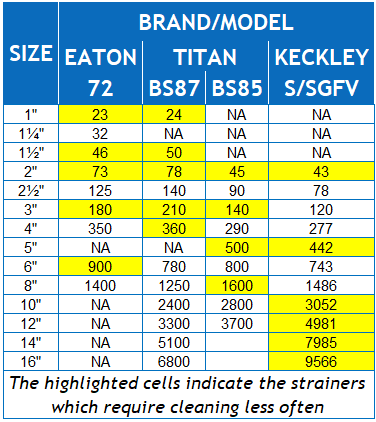
If your flow rate is relatively low for the pipeline size, Cv differences become less critical. See our article Effects of Fluid Velocity and Differential Pressure when Selecting Pipeline Strainers for guidance on using web-based sizing tools to select the best-performing design for a specific application.
Call 908.362.9981 - speak with a sales engineer
or Submit the Strainer Inquiry Form